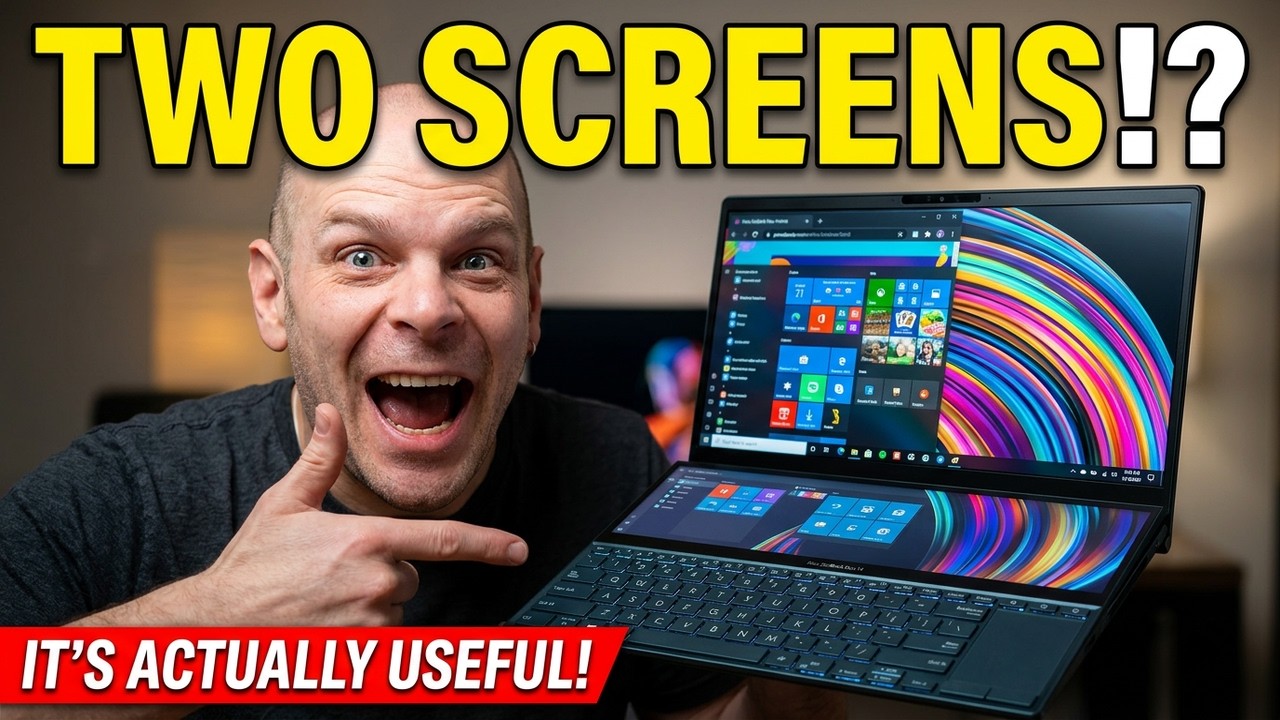
Check the latest price here #ad
ASUS ZenBook Duo 14 Specifications and Intel Evo Platform
The ASUS ZenBook Duo 14 is a distinctive laptop known for its dual touchscreen displays and robust performance, tailored to meet the demands of on-the-go professionals and multitaskers. At the heart of this device is the Intel Evo platform, which guarantees a premium computing experience with efficiency and responsiveness.
Core Hardware Specifications
This ZenBook Duo 14 model features a 14-inch Full HD (FHD) touchscreen primary display coupled with a secondary touchscreen located just above the keyboard. Both screens support touch input, enhancing the versatility of interaction beyond the traditional keyboard and trackpad.
|
Specification |
Details |
|---|---|
|
Processor |
Intel Core i5-1155G7 |
|
RAM |
8 GB |
|
Storage |
512 GB Solid State Drive (SSD) |
|
Display Size |
14 inches (Primary FHD touchscreen) |
|
Secondary Display |
Touchscreen located below the keyboard |
|
Platform |
Intel Evo |
Intel Evo Platform Benefits
The integration of the Intel Evo platform is a significant aspect of this laptop. Intel Evo certification ensures several key benefits that enhance user experience :
-
Ultra-fast Wake Times : The ZenBook Duo 14 wakes up from sleep mode in about one second, almost instantaneously ready for use.
-
Responsive Performance : The Core i5-1155G7 processor combined with 8GB of RAM delivers smooth multitasking and productivity.
-
Long Battery Life and Fast Charging : Though not explicitly stated, Intel Evo devices are typically optimized for extended battery usage and quick recharge cycles.
-
Connectivity : Intel Evo devices usually feature advanced Wi-Fi 6 and Thunderbolt 4 support for faster data transfer and reliable wireless connections.
This platform ensures the ZenBook Duo 14 is not only powerful but also efficient and ready to handle demanding workloads on the move.
Build Quality and Design Considerations
The ASUS ZenBook Duo 14 boasts a durable metal chassis that contributes to its premium feel and long-term reliability. The solid metal construction is a hallmark of ASUS engineering, providing both sturdiness and a sleek aesthetic that appeals to professionals. This build quality complements the innovative dual-screen setup, making the device a practical choice for those requiring both style and substance.
Additionally, the keyboard is designed to be full-sized and comfortable, avoiding the cramped feeling often associated with compact laptops. While left-handed users might find the trackpad placement slightly less convenient, right-handed users benefit from an excellent ergonomic layout that facilitates productivity.
Dual Touchscreen Display and Usability
The defining feature of the ASUS ZenBook Duo 14 is its dual touchscreen display configuration, which transforms the traditional laptop workspace into a dynamic multitasking environment. This section explores the usability, practical benefits, and unique features of this dual-screen system.
Configuration of the Dual Screens
The laptop includes a primary 14-inch Full HD touchscreen that functions as the main workspace, paired with a secondary touchscreen positioned just above the keyboard. Both screens are fully touch-enabled, allowing for intuitive interaction whether you are tapping, dragging, or using gestures.
This setup significantly expands the usable screen real estate without increasing the laptop’s physical footprint, making it ideal for users who need to reference multiple applications or documents simultaneously.
Practical Use Cases and Workflow Enhancement
One popular use case demonstrated is utilizing the secondary screen as a reference area while working on the primary screen. For example, a user might keep research materials, chat windows, or tool palettes on the lower screen, while dedicating the upper screen entirely to core tasks such as writing, editing, or designing.
Dragging and dropping windows between the two displays is seamless and intuitive. The laptop’s interface clearly labels each screen as “1” and “2,” allowing users to easily identify where windows will move as they drag them across the displays. Furthermore, the system supports subdividing the secondary screen into smaller sections using on-screen guides, enabling more precise window placement and multitasking efficiency.
Touchscreen Interaction and Controls
Both screens respond to touch, meaning users can tap, scroll, and manipulate content directly. This interactive capability makes it convenient to switch between input methods, whether using the keyboard and trackpad or tapping on the screens themselves.
Additionally, the ZenBook Duo 14 includes dedicated buttons for managing the secondary display :
-
Screen Off Button : Users can turn off the secondary screen to conserve battery life or reduce distractions when it’s not needed.
-
Flip Display Button : This unique feature swaps the content of the primary and secondary screens. If a user wants to view a particular window or document in a larger format temporarily, they can flip the screens and then revert back to the original layout with ease.
Ergonomics and User Experience
Despite initial concerns that the layout might feel awkward or clumsy, the dual-screen design is praised for its ergonomic advantages. The keyboard remains full-sized and comfortable, avoiding any compromise in typing experience. The trackpad is positioned slightly to the right, which may be less ideal for left-handed users but works excellently for right-handers.
This configuration encourages an efficient workflow where users can effortlessly switch focus between multiple applications. The ability to keep reference materials, communications, or creative tools on the secondary screen while dedicating full attention to main tasks on the primary display makes the ZenBook Duo 14 a productivity powerhouse.
Portability and Real-World Usage
The ZenBook Duo 14 is designed for mobility without sacrificing functionality. Its durable metal chassis and compact form factor make it well-suited for working in environments like coffee shops or during travel. The dual-screen setup often draws attention from onlookers impressed by the innovation, but more importantly, it provides the user with a “portable headquarters” capable of handling complex multitasking needs.
Users have reported that carrying an additional external monitor alongside the ZenBook Duo 14 further expands their workspace, making this laptop a core component of a highly flexible mobile workstation.
Summary of Usability Advantages
-
Two fully functional touchscreens expand workspace without added bulk.
-
Intuitive drag-and-drop window management across screens enhances productivity.
-
Dedicated controls to toggle the secondary screen on/off and flip display content provide flexible use options.
-
Comfortable full-sized keyboard and right-handed optimized trackpad support extended use.
-
Robust metal build ensures durability and premium feel for mobile professionals.
-
Ideal for multitasking in various environments, from coffee shops to remote offices.
Keyboard and Trackpad Experience
The ASUS ZenBook Duo 14 offers a keyboard and trackpad experience that balances comfort and functionality despite the unconventional dual-screen design. Users might initially expect a cramped or awkward typing area due to the secondary screen placement, but the keyboard pleasantly surprises with its full-size layout and comfortable key spacing.
Keyboard Layout and Feel
The keyboard on the ZenBook Duo 14 does not feel like a compact or “micro” keyboard, which is often the case with smaller laptops or those that sacrifice keyboard space for additional features. Instead, it maintains a full-size feel, allowing for a natural typing posture and reducing strain during extended use. This design consideration helps users transition smoothly without feeling constrained or needing to adjust their typing style significantly.
While the keyboard is generally user-friendly, left-handed users might encounter some minor inconvenience with the placement of the trackpad, which is positioned to the left of the keyboard. This setup might require some adjustment for left-handed individuals, but for right-handed users, the trackpad location works excellently and feels intuitive.
Trackpad Placement and Usability
The trackpad is uniquely positioned to the left of the keyboard rather than centered below it, which is a departure from traditional laptop designs. This placement is necessary to accommodate the secondary screen above the keyboard area. For right-handed users, this trackpad location is highly functional, offering ease of use without interfering with typing. The reviewer, who is right-handed, expresses satisfaction with this arrangement, noting that it works excellently in practice.
However, left-handed users may need some time to adapt to this layout, as the trackpad’s left-side placement could interfere with typing or feel less ergonomic. Despite this, the overall trackpad experience remains responsive and smooth, supporting multi-touch gestures and complementing the touchscreen capabilities of both displays.
Touchscreen Integration
Both the primary 14-inch FHD display and the secondary ScreenPad Plus touchscreen below the keyboard are fully touch-enabled. This touch functionality enhances interaction with the laptop, allowing users to tap, swipe, and drag windows fluidly across both screens. The touchscreen support also helps compensate for the smaller trackpad area and its unusual positioning, offering an alternative input method that feels natural and responsive.
In summary, the keyboard and trackpad experience on the ASUS ZenBook Duo 14 is thoughtfully designed to maximize usability within the dual-screen form factor. The full-size keyboard, combined with a well-placed trackpad and dual touchscreens, creates a versatile input environment that caters well to most users, especially right-handed typists.
Multi-Window Management and Screen Navigation
One of the standout features of the ASUS ZenBook Duo 14 is its innovative multi-window management system, which leverages the dual-screen setup to boost productivity and workflow efficiency. Managing windows across two touch-enabled displays may seem daunting at first, but the ZenBook Duo simplifies this process with intuitive drag-and-drop controls and clear visual cues.
Seamless Window Dragging Between Screens
Users can effortlessly drag application windows from the primary top screen to the secondary bottom ScreenPad Plus and vice versa. When dragging a window, numbered labels appear—“1” for the main screen and “2” for the secondary screen—helping users identify where the window will land once released. This visual feedback ensures smooth navigation without confusion.
For example, if a user wants to move a reference document to the secondary screen while working on a primary task on the main screen, they simply click and drag the window to the labeled area representing the bottom screen. The window instantly pops into place, allowing for quick multitasking and better use of screen real estate.
Screen Partitioning for Efficient Layouts
The secondary screen includes interactive bottom bars that divide the screen into specific zones or squares. These zones allow users to snap windows to particular areas of the secondary display, such as the left or right side. This feature helps organize multiple applications or documents simultaneously, keeping the workspace tidy and accessible.
For instance, a user can drag one window to the right half of the bottom screen and another to the left half, effectively splitting the secondary display into two functional sections. This capability supports workflows that require constant referencing of multiple sources or applications, such as coding and documentation or design and communication apps.
Intuitive Interaction with Touchscreens and Trackpad
Both the top and bottom displays support touch input, enabling users to tap, swipe, and interact directly with windows and applications. This enhances the multi-window experience by providing more natural and direct control, especially when moving or resizing windows between screens.
Moreover, combined with the trackpad positioned to the left of the keyboard, users have multiple input options to manage their workspace fluidly. Whether using gestures on the trackpad or tapping on the screens, the ZenBook Duo 14 makes navigating between multiple windows straightforward and efficient.
Practical Use Cases for Multi-Window Workflow
The dual-screen and multi-window management capabilities shine in real-world scenarios, such as :
-
Content Creation : Editing a video or photo on the main screen while using the secondary screen for tool palettes, timelines, or reference images.
-
Programming : Coding on the primary display with documentation, debugging tools, or terminal windows open on the secondary display.
-
Research and Writing : Drafting an article or report on the main screen while keeping research material, notes, or fact-checking tools on the bottom screen.
-
Communication : Participating in video calls or chats on one screen while working on documents or presentations on the other.
Overall, the multi-window management and screen navigation features of the ASUS ZenBook Duo 14 are designed to empower users to work smarter, not harder, by maximizing the potential of two interactive displays. The system’s visual cues, easy drag-and-drop functionality, and screen partitioning tools create a highly customizable and productive environment.
Unique Features : Screen Toggle and Flip Functions
The ASUS ZenBook Duo 14 comes equipped with distinctive hardware and software features that enhance its dual-screen usability, most notably the screen toggle and flip functions. These unique controls provide users with flexible options to optimize their workspace, conserve power, and tailor the display setup to their needs.
Screen Toggle Button : Power Management and Focus
One of the dedicated buttons on the laptop allows users to turn off the secondary screen completely. This feature is particularly useful in situations where the second display is not needed, or when the user wants to save battery life during extended use away from a power source.
By toggling off the secondary screen, the laptop reduces power consumption and simplifies the display setup, allowing the user to focus solely on the primary screen. This can be helpful during tasks that require undivided attention or when working in environments where conserving battery is critical.
Screen Flip Button : Reversing Display Positions
Another innovative feature is the screen flip button, which swaps the content displayed on the top and bottom screens. When activated, whatever was shown on the primary screen moves to the secondary screen and vice versa. This function provides a quick way to adjust the workspace layout depending on user preference or task requirements.
For example, if a user is referencing content on the bottom screen and wants to see it larger or more prominently, they can flip the screens so that content appears on the primary display. This temporary rearrangement enhances visibility and accessibility without manually dragging windows around.
After reviewing or interacting with the flipped content, users can easily switch back to the original configuration with a single press of the button, maintaining workflow continuity.
Integration with Touchscreen Capabilities
Both screens being touch-enabled complements these toggle and flip functions. Users can tap, swipe, and interact directly with windows whether the screen is in its default or flipped state. This seamless integration ensures that toggling or flipping the screens does not disrupt the natural flow of work.
Practical Benefits of Toggle and Flip Features
-
Enhanced Flexibility : Quickly adapt the workspace for different tasks or preferences without complex reconfiguration.
-
Power Efficiency : Save battery life by turning off the secondary screen when not in use.
-
Improved Visibility : Bring important reference material to the primary screen for easier viewing when needed.
-
Streamlined Workflow : Minimize window management steps with simple hardware buttons controlling screen behavior.
These unique features demonstrate ASUS’s commitment to making the dual-screen experience not just novel but truly practical and user-friendly. They add an extra layer of control and customization that sets the ZenBook Duo 14 apart from other laptops with secondary displays.
Build Quality and Durability
The ASUS ZenBook Duo 14 stands out not only for its innovative dual-screen design but also for its impressive build quality and durability. Constructed with a solid metal chassis, this laptop delivers a robust and premium feel that reassures users of its longevity and resistance to everyday wear and tear.
Metal Construction for Enhanced Strength
The entire body of the ZenBook Duo 14 is crafted from high-grade metal, which contributes significantly to its durability. Unlike many laptops that use plastic or mixed materials, the all-metal construction offers a sturdy frame that feels solid in hand. This metal build not only protects the internal components but also gives the laptop a sleek and professional aesthetic that is perfect for both office and casual environments.
Durability in Everyday Use
In real-world scenarios, the laptop’s metal body handles frequent opening, closing, and transportation without showing signs of stress or damage. This toughness is essential for professionals who often work on the go, such as those who bring their devices to coffee shops or coworking spaces. The laptop withstands the rigors of daily commuting, backpacking, and even occasional bumps, ensuring the device remains operational and visually appealing for a long time.
Keyboard and Trackpad Build Quality
Despite the unconventional layout due to the secondary screen placement, the keyboard maintains a full-size feel and does not compromise on tactile feedback or sturdiness. The keys provide comfortable typing experiences without feeling cramped or fragile. The trackpad, positioned to the right of the keyboard, is well-built and responsive, catering particularly well to right-handed users.
Additional Build Features
-
Hinge Mechanism : The hinge supporting the dual-screen setup is engineered to hold the displays firmly in place, preventing wobble or instability when typing or interacting with the touchscreens.
-
Touchscreen Surfaces : Both the main and secondary displays are touch-enabled and made from durable glass that resists scratches and fingerprints, maintaining clarity and responsiveness over time.
-
Power and Function Buttons : The buttons used to toggle the secondary screen on and off or to flip the displays are solidly built, providing satisfying tactile feedback and reliable operation.
Summary
Overall, the ASUS ZenBook Duo 14’s build quality impresses with its solid metal construction, robust keyboard, and durable touchscreen materials. These elements combine to create a device that can withstand heavy daily use while maintaining its premium look and feel. For users seeking a laptop that balances innovative design with long-lasting durability, the ZenBook Duo 14 is an excellent choice.
Real-World Usage and Productivity Benefits
The ASUS ZenBook Duo 14 is not just a novelty with two screens; its design translates into tangible productivity benefits that enhance everyday workflows. The dual touchscreen setup is intelligently implemented to maximize efficiency, multitasking, and ease of use, making it an effective tool for professionals, creatives, and multitaskers alike.
Dual-Screen Workflow Advantages
One of the most significant productivity boosters is the ability to use the secondary screen as a dedicated reference or auxiliary workspace. For example, users can keep research materials, chat windows, or tool palettes on the bottom screen while focusing on the primary display for the main work, such as document editing or graphic design. This division of tasks reduces the need to constantly switch between windows, streamlining the workflow.
Flexible Window Management
The ZenBook Duo 14 supports intuitive window dragging and placement between the two screens. Users can easily drag windows from the primary display to the secondary one and position them on specific sections of the screen thanks to built-in screen division features. This flexibility allows for customized layouts that fit individual work habits and project requirements.
Touchscreen Interaction
Both displays are touch-enabled, allowing users to tap, swipe, and interact with applications directly. This capability is particularly useful for creative professionals who use stylus pens for drawing or annotating documents. The touchscreen functionality adds another layer of interaction, making the device more versatile than traditional laptops.
Keyboard and Trackpad Usability
Despite the unconventional keyboard placement, the typing experience remains comfortable and efficient. The keyboard is full-sized and does not feel cramped, enabling fast and accurate typing sessions. The trackpad, located to the right side, works exceptionally well for right-handed users, although left-handers might need some adjustment.
Special Features Enhancing Productivity
-
Screen Toggle Button : There is a dedicated button to turn off the secondary screen when it’s not needed, helping save battery life and reduce distractions.
-
Screen Flip Function : Another button allows users to flip the content between the two screens. This feature is handy when users want to temporarily enlarge content or change their workflow dynamics.
Practical Examples of Use
In practical settings like coffee shops or coworking spaces, the ZenBook Duo 14 allows users to set up a multi-screen environment anywhere without additional monitors. This setup not only impresses others but also significantly boosts multitasking capabilities. For instance, one can have a video call on the main screen while taking notes or referencing documents on the secondary display.
Summary
The real-world usage of the ASUS ZenBook Duo 14 demonstrates that its dual screens are not just gimmicks but genuine productivity enhancers. The device’s multitasking capabilities, touchscreen interactivity, and flexible window management create a workflow that is both efficient and enjoyable. Whether you are a content creator, office worker, or casual user, this laptop’s design offers significant productivity advantages.
Portability and Multi-Screen Setup for On-the-Go Work
Portability is a critical consideration for any laptop, especially one with a dual-screen design like the ASUS ZenBook Duo 14. Despite its additional screen, this laptop manages to remain highly portable, making it an excellent companion for professionals who need a multi-screen setup while on the move.
Compact and Lightweight Design
The ZenBook Duo 14 features a 14-inch primary Full HD touchscreen paired with a secondary touchscreen just below the keyboard. This configuration is ingeniously integrated without making the device bulky or heavy. The laptop folds neatly, protecting both screens when closed, and fits comfortably into a standard backpack or laptop bag.
Setting Up Multi-Screen Environments Anywhere
One of the standout benefits of this laptop is the ability to have a multi-screen workstation wherever you go. Unlike traditional setups that require carrying additional monitors, the ZenBook Duo 14 delivers dual displays in a single compact device. This capability is particularly advantageous for professionals who work from coffee shops, shared offices, or while traveling.
Adding External Displays for Enhanced Productivity
For those who want even more screen real estate, the laptop can easily connect to an external monitor, creating a triple-screen setup on the go. This flexibility turns any workspace into a highly productive environment, offering the convenience of multiple screens without the hassle of multiple devices.
Battery Considerations and Power Management
Given the dual-touchscreen design, battery consumption could be a concern. However, the laptop includes features like a dedicated button to turn off the secondary screen when not in use, helping conserve power during travel or extended use away from power outlets. This thoughtful design consideration ensures the device remains practical for mobile users.
Impressing in Public and Professional Settings
Beyond functionality, the ZenBook Duo 14 draws attention and admiration in public settings. The uniqueness of having two screens in a slim form factor often sparks interest and conversation, making it a conversation starter and a statement piece for tech-savvy professionals. It signals innovation and readiness to tackle complex workflows anywhere.
Summary
In terms of portability, the ASUS ZenBook Duo 14 strikes an excellent balance between functionality and mobility. Its compact metal design, integrated dual screens, and power management features make it ideal for users who demand a multi-screen experience without sacrificing ease of transport. Whether setting up in a coffee shop or traveling between meetings, this laptop offers a versatile and highly portable multi-screen solution.
Check the latest price here #ad